
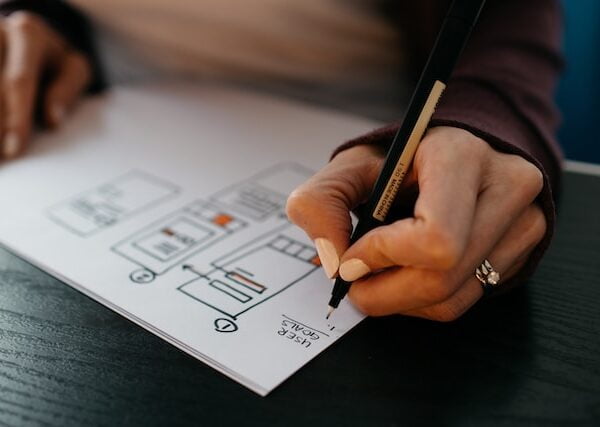
User Experience Design:
Creating user personas, user flows, and wireframes to outline the structure and interaction of a digital product or application.
User Interface Design:
Creating visually appealing and user-friendly interfaces. Making design decisions regarding colors, typography, icons, and other graphical elements to enhance the overall user experience and creating visually engaging designs.
Prototyping and Testing:
Building interactive prototypes to demonstrate the functionality and usability of the design. Conducting usability tests to gather feedback from users and iterate on the design to improve its effectiveness.
Collaboration:
Collaboration with cross-functional teams, including product managers, developers, and stakeholders to align on project goals, requirements, and deliverables.
Visual Design:
Creating visually engaging designs that align with brand guidelines and effectively communicate the purpose and message of the product.
Iteration and Improvement:
Continuously evaluating and improving the user experience through feedback, data analysis, and iterative design processes.
The core tech skill set a UX/UI Designer:
Capability to create site maps, user flows, and wireframes to organize content and features in a logical and intuitive way.
Sound knowledge of visual design tools like Adobe Photoshop, Illustrator, Figma, Sketch or InVision. Aptitude to generate high-fidelity mockups, prototypes, and visual design components that are precise and visually attractive.
Strong understanding of interaction design, involving the creation of user flows, animations, and micro-interactions that improve the user experience. Knowledge of interaction design tools such as Principle, Flinto, or Proto.io.
Basic knowledge of front-end web development technologies like HTML, CSS, and JavaScript.
Grasp of mobile design principles, including developing for small screens, touch-based interactions, and mobile-specific features such as push notifications and location services.
Awareness of accessibility guidelines and WCAG standards ensures that UX/UI designers create designs that are inclusive and accessible to users with disabilities.
In addition, a good UX/UI designer is versatile and constantly learning new skills to stay up to date with industry trends and best practices.
The essential soft skills of a UX/UI Designer:
Among the essential soft skills are communication, creativity, empathy, problem-solving, time management, and flexibility. Effective communication is crucial to present ideas and listen to feedback. Creativity and empathy help in designing solutions that meet user needs, while problem-solving skills address design challenges. Time management skills ensure that projects are delivered on time, and flexibility allows designers to pivot designs as the project progresses.